Architecture of Galata Tower — Genoese Construction, Ottoman Modifications & Measurements
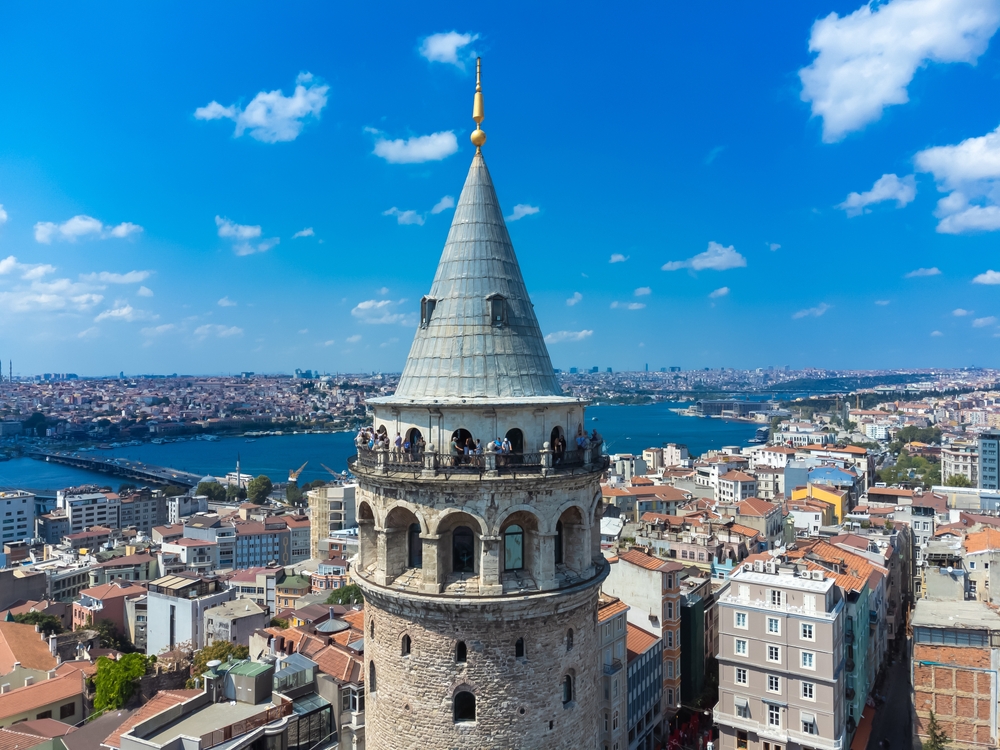
Structural Overview
Galata Tower is a cylindrical stone tower of Genoese origin, built using construction techniques that were state-of-the-art in 14th-century Mediterranean military architecture. The tower's survival through 678 years of earthquakes, fires, and human conflict is testament to the quality of its original construction and the care of successive restorations.
Key Measurements
| Dimension | Measurement |
|---|---|
| Total height | 62.59 m (205.3 ft) |
| Observation balcony height | ~51 m (167 ft) |
| Exterior diameter | 16.45 m (54 ft) |
| Interior diameter | 8.95 m (29.4 ft) |
| Wall thickness (base) | 3.75 m (12.3 ft) |
| Number of floors | 9 |
| Hilltop elevation | 35 m above sea level |
| View altitude | ~140 m above sea level |
Genoese Construction (1348)
Materials and Technique
The original Genoese construction employed a rubble-core masonry technique common in 14th-century Ligurian military architecture. This technique involves:
-
Exterior facing: Carefully dressed limestone blocks cut to regular shapes and sizes, laid in courses with thin mortar joints. These blocks provide the visible surface and bear the primary loads.
-
Interior core: A mixture of rubble stone, broken brick, and lime mortar fills the space between the inner and outer faces. This core provides mass and compressive strength.
-
Lime mortar: The binding agent throughout is lime mortar, which continues to cure and strengthen over centuries — a property that has contributed to the tower's remarkable longevity.
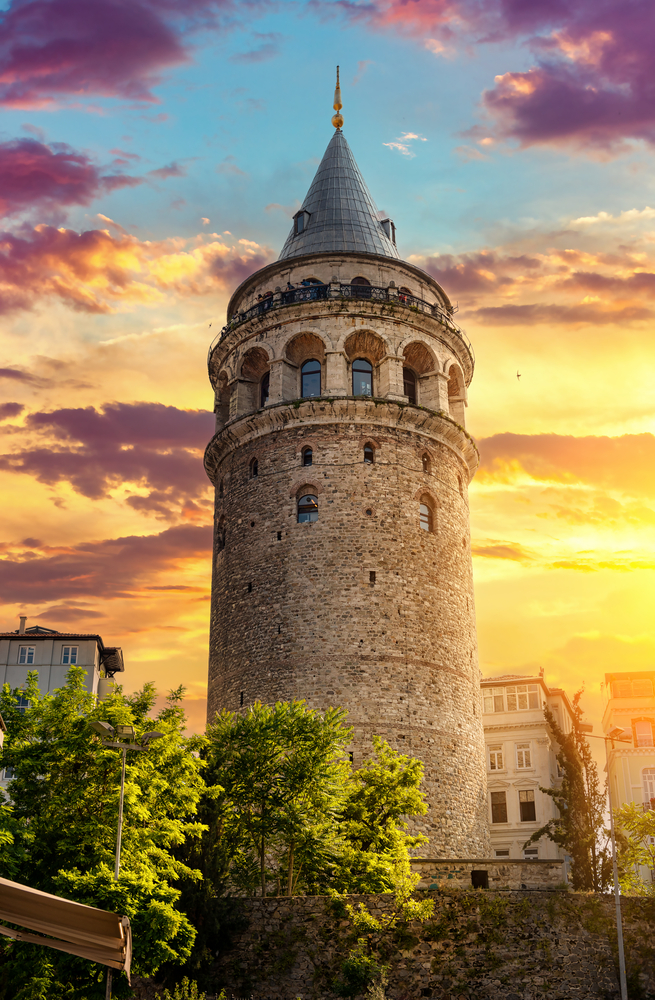
The limestone used was sourced locally from quarries in the Marmara region. The stone's warm, honey-toned color gives the tower its characteristic appearance, especially in late afternoon light when the surface seems to glow.
The Cylindrical Form
The decision to build a cylindrical tower rather than a square or polygonal one was deliberate. Cylindrical towers offer several military and structural advantages:
- Wind resistance: A circular cross-section creates less wind load than flat surfaces, crucial for a tall, exposed structure
- Earthquake resistance: Circular structures distribute seismic forces more evenly than rectangular ones
- Siege resistance: Rounded walls deflect projectiles more effectively than flat walls, and there are no corner weaknesses
- Interior space: A cylinder provides maximum interior area for a given wall perimeter
The Tapering Walls
The walls taper from 3.75 meters at the base to approximately 2 meters at the upper levels. This tapering serves multiple purposes:
- It reduces the weight on the lower structure
- It lowers the center of gravity, improving stability
- It creates a subtle visual narrowing that makes the tower appear even taller than it is
Ottoman Modifications
Post-1453 Adaptations
After the Ottoman conquest, the tower was integrated into the broader Istanbul infrastructure. The most significant Ottoman-era changes include:
The Conical Cap: The distinctive pointed cap that crowns the tower today is primarily an Ottoman addition and reconstruction. The original Genoese top was likely a crenellated battlement similar to other surviving Genoese towers in the Mediterranean. The conical cap was added or rebuilt following earthquake damage in 1509 and fire damage in 1794. Made of lead-covered timber over a stone base, it gives the tower its iconic silhouette.
Height Addition: In the 19th century, a two-story section was added above the original Genoese structure to improve sightlines for fire watchers. This addition is visible in architectural surveys as a slight change in stone color and coursing at the upper levels.
Interior Modifications: The original Genoese interior was primarily an open core with a spiral staircase. Ottoman modifications added wooden floor levels, creating distinct stories within the cylindrical space.
The 1794 Reconstruction
The fire of 1794 was particularly significant architecturally. The interior was gutted, and the conical cap was destroyed. The reconstruction that followed — completed within a few years — essentially created the tower interior as we experience it today:
- New timber floor structures on each level
- Rebuilt conical cap with the now-iconic profile
- Reinforced masonry at the upper levels
- New observation galleries
Modern Restoration (1967 and 2020)
The 1967 Restoration
The 1967 restoration focused on structural reinforcement and the creation of tourism infrastructure:
- Reinforced concrete elements were introduced at critical load points
- The spiral staircase was rebuilt with modern materials
- An elevator shaft was created within the interior
- Observation platforms were formalized
The 2020 Museum Renovation
The 2020 renovation was the most comprehensive intervention in the tower's modern history:
- Structural assessment: Full engineering survey using ground-penetrating radar, laser scanning, and material analysis
- Stone conservation: Damaged exterior stones were repaired or replaced using compatible limestone
- New elevator: A modern, higher-capacity elevator replaced the 1967 system
- Museum installations: Each floor received purpose-designed exhibition spaces with climate control
- Lighting: An architecturally designed illumination system highlights the tower's form at night
- Safety: New safety railings on the observation balcony, improved emergency systems
Architectural Context
Galata Tower belongs to a family of medieval Genoese towers found throughout the Mediterranean. Similar structures survive in:
- Genoa, Italy — The Lanterna (lighthouse), though significantly different in design
- Corsica — Multiple Genoese coastal watchtowers
- Crimea — Towers at Sudak and other former Genoese colonies
- Sardinia — Various coastal defense towers
However, Galata Tower is the largest and best-preserved of the Genoese colonial towers, and its continuous use over nearly seven centuries makes it unique among medieval European watchtowers.
Engineering Resilience
The tower has survived at least four major earthquakes (1509, 1766, 1894, and 1999) and two devastating fires (1794, 1831). This resilience is attributed to:
- The cylindrical form distributes seismic forces evenly
- The massive wall thickness at the base provides inherent stability
- The rubble-core construction absorbs energy through internal friction
- The lime mortar has continued to cure over centuries, actually becoming stronger
- The tapering profile keeps the center of gravity low
- The hilltop bedrock foundation provides a stable base
For a floor-by-floor description of what visitors see inside, read our Floor Guide.
Frequently Asked Questions
How tall is Galata Tower exactly?
Galata Tower stands 62.59 meters (205.3 feet) from ground level to the tip of its conical cap. The observation balcony sits at approximately 51 meters. Combined with the hilltop elevation of 35 meters above sea level, the balcony provides views from roughly 140 meters above sea level.
How thick are the walls of Galata Tower?
The walls at the base are approximately 3.75 meters (12.3 feet) thick. This exceptional thickness provides both structural stability and earthquake resistance. The walls taper gradually as they rise, becoming thinner at the upper levels.
How many floors does Galata Tower have?
Galata Tower has 9 floors. The ground floor serves as the entrance and ticket area. Floors 1-7 contain museum exhibitions. Floor 8 has a mezzanine viewing area. Floor 9 is the observation balcony with 360-degree open-air views.
What type of stone was used to build Galata Tower?
The tower was constructed primarily with local limestone and a rubble-core technique typical of 14th-century Genoese military architecture. The exterior facing stones were carefully dressed limestone blocks, while the interior core consisted of rubble bound with lime mortar.