Galata Neighborhood Guide — Karaköy, Bankalar Caddesi, İstiklal & Walking Tour
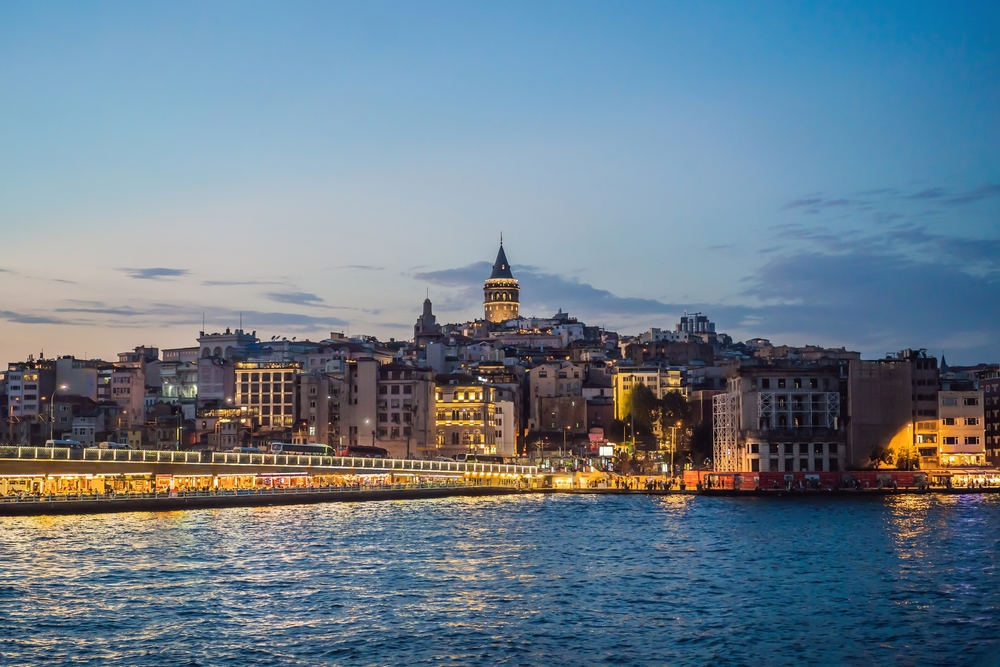
The Heart of Istanbul's Creative Quarter
The streets surrounding Galata Tower form one of Istanbul's most fascinating, walkable, and historically layered neighborhoods. Within a 10-minute walking radius of the tower, you'll find Byzantine-era cellars beneath Genoese-era buildings housing 21st-century art galleries — a palimpsest of civilizations condensed into a few steep, cobblestoned streets.
Key Areas to Explore
Karaköy Waterfront
Karaköy (historically known as Galata) is the waterfront neighborhood at the base of the Galata hill. Once the center of Genoese commerce and later the Ottoman Empire's international banking hub, Karaköy has undergone a dramatic renaissance since the 2010s.
Don't miss:
- Karaköy fish sandwich boats — Grilled fish sandwiches served from boats at the waterfront, an Istanbul institution
- The ferry terminal — Catch a Bosphorus ferry to the Asian side or the Princes' Islands
- Art galleries — The Karaköy waterfront is lined with contemporary galleries
- Karaköy Güllüoğlu — Istanbul's most famous baklava shop, serving since 1949
Bankalar Caddesi (Banks Street)
Running along the base of the Galata hill, Bankalar Caddesi was the financial center of the Ottoman Empire from the mid-19th century through the early Republic. The grand neoclassical and Art Nouveau buildings that once housed the Ottoman Bank, Credit Lyonnais, and various European insurance companies still stand, now repurposed as cultural centers, boutique hotels, and restaurants.
Key buildings:
- SALT Galata — The former Ottoman Imperial Bank headquarters, now a stunning cultural center with exhibitions, a research library, and the restaurant Neolokal
- Voyvoda Caddesi — The continuation of the banking street with beautifully preserved 19th-century architecture
- Ottoman Bank Museum — Inside SALT Galata, preserving the original bank vault and archives
The Galata Streets
The steep, narrow streets climbing from the waterfront to the tower are the neighborhood's greatest charm. Each street has its own character:
- Serdar-ı Ekrem Caddesi — The trendiest street, lined with design boutiques, concept stores, and cafés
- Yüksek Kaldırım — The stepped street connecting Karaköy to the tower, lined with music shops, vintage stores, and art supply shops
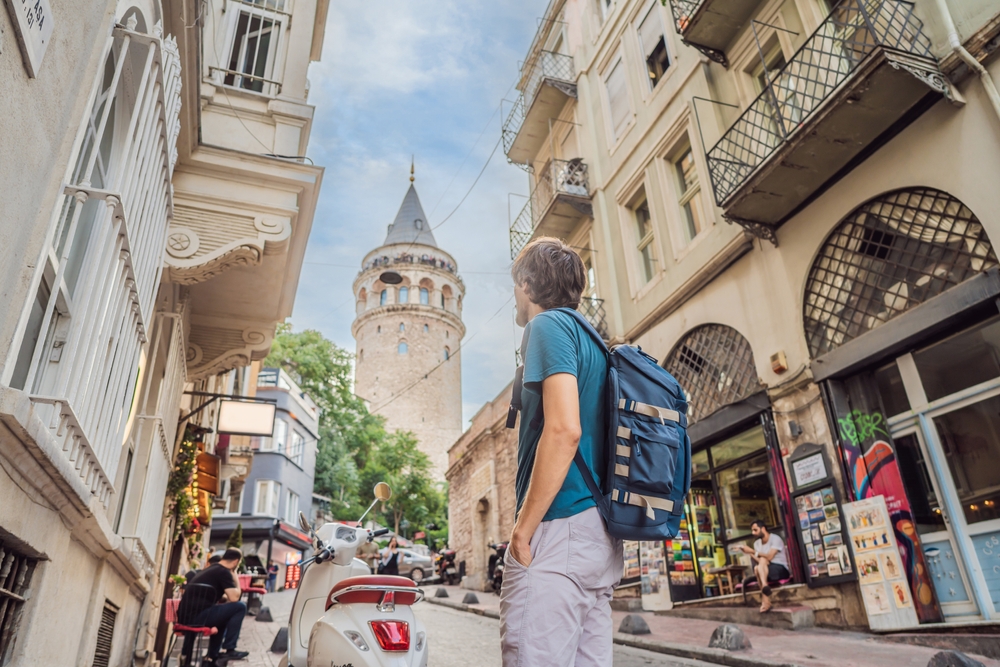
- Galata Kulesi Sokak — The cobblestone street leading directly to the tower base, photogenic from every angle
- Galip Dede Caddesi — Known for its music instrument shops, selling everything from ouds to bağlamas
The Tünel
The Tünel funicular is the world's second-oldest underground railway (opened in 1875, one year after the London Metropolitan Railway). This single-stop underground railway connects the Karaköy waterfront to the upper Beyoğlu/Pera ridge in about 90 seconds. The upper station emerges near the beginning of İstiklal Avenue.
Riding the Tünel is both a practical transport option and a historical experience. The original wooden carriages have been replaced, but the tunnel itself is original 19th-century engineering.
İstiklal Avenue
A 10-minute walk north from Galata Tower brings you to İstiklal Caddesi (Independence Avenue), Istanbul's famous pedestrian boulevard. Stretching 1.4 km from Tünel to Taksim Square, İstiklal is lined with:
- 19th-century European-style buildings and historic arcades (pasajlar)
- The iconic red nostalgic tramway
- Theaters, cinemas, bookshops, and consulates
- The historic Çiçek Pasajı (Flower Passage) and Balık Pazarı (Fish Market)
- Churches, mosques, and synagogues in close proximity
Galata Bridge
Galata Bridge (Galata Köprüsü) spans the Golden Horn and is one of Istanbul's most iconic structures. The current bridge (the fifth on the site) has two levels:
- Upper level: Pedestrian sidewalks and vehicle traffic, plus the tram line
- Lower level: A row of seafood restaurants with Golden Horn views
The bridge is famous for the dozens of fishermen who line its railings at all hours, casting lines into the Golden Horn. Walking across the bridge — especially at sunset — is one of Istanbul's quintessential experiences.
Self-Guided Walking Tour (2–3 Hours)
Here's a recommended walking route that covers the best of the neighborhood:
- Start at Karaköy ferry terminal — Orient yourself at the waterfront
- Walk to Karaköy Güllüoğlu — Grab a baklava to fuel the walk
- Head up Bankalar Caddesi — Admire the grand 19th-century facades
- Visit SALT Galata — Browse the exhibitions (free) and the library
- Climb Yüksek Kaldırım — The stepped street with music shops
- Reach Galata Tower — Visit the tower or admire from the plaza
- Explore Serdar-ı Ekrem Caddesi — Coffee break at a design café
- Visit the Galata Mevlevi Lodge — Whirling dervish museum (if open)
- Walk to Tünel — Take the funicular down or continue to İstiklal
- End at Galata Bridge — Sunset walk across the bridge
Historic Sites Near the Tower
Galata Mevlevi Lodge (Galata Mevlevihanesi)
A 15th-century lodge of the Mevlevi order (whirling dervishes), now a museum. Sema ceremonies are occasionally performed here. The peaceful garden and historic architecture are a contrast to the bustling streets outside.
Arap Mosque (Arap Camii)
Originally a Dominican church built by the Genoese (13th century), converted to a mosque after 1453. Its Gothic architecture — unusual for an Istanbul mosque — reflects the neighborhood's multi-layered history.
Neve Shalom Synagogue
One of Istanbul's most important synagogues, serving the city's Sephardic Jewish community since the 15th century. Visits can be arranged by prior appointment.
Galata Tower Dungeon (Genoese Foundations)
Archaeological remains of the Genoese fortification system are visible at various points around the neighborhood, including sections of the original wall foundations.
For dining recommendations in the neighborhood, see our Restaurant Guide.
Frequently Asked Questions
Is the Galata neighborhood safe for tourists?
Yes, the Galata/Karaköy/Beyoğlu area is one of Istanbul's safest and most tourist-friendly neighborhoods. The streets are well-lit, police presence is visible, and the area is bustling with locals and visitors until late at night. Standard urban precautions apply — watch for pickpockets in crowded areas.
What is there to do near Galata Tower?
The neighborhood offers art galleries, specialty coffee shops, antique stores, historic synagogues, the Galata Mevlevi Lodge (whirling dervish museum), the SALT Galata cultural center, Bankalar Caddesi (Ottoman banking street), the Galata Bridge, and countless restaurants and bars.
How long should I spend in the Galata neighborhood?
Plan at least half a day (3-4 hours) to properly explore the neighborhood including the tower visit. A full day allows for a walking tour, museum visits, lunch at a local restaurant, and evening drinks on a rooftop terrace.