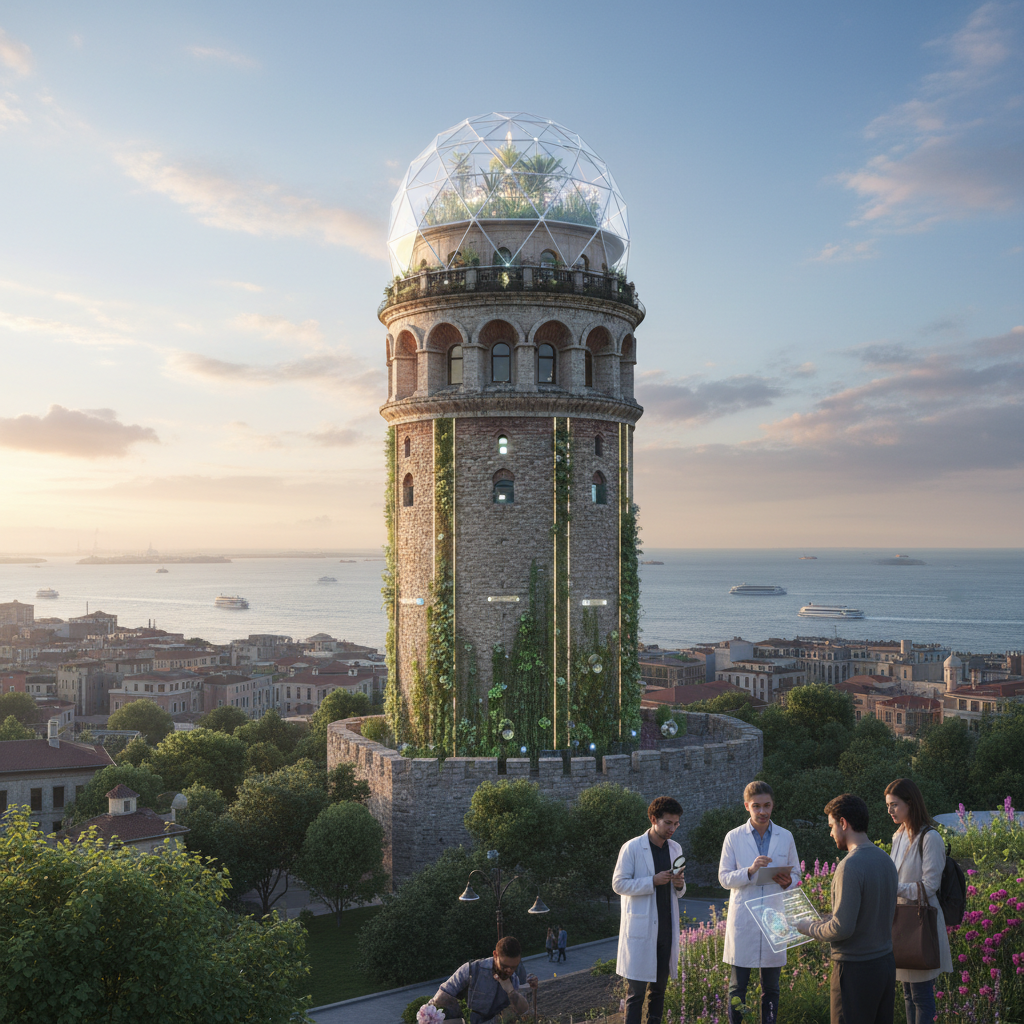
Galata Tower and Climate Change in 2026: A Natural Heritage Observatory
Crowning Istanbul's unique skyline, the centuries-old Galata Tower is not just a monument, but a living heritage witnessing the city's history and cultural fabric. As we enter 2026, the future of this magnificent structure is increasingly intertwined with climate change, a global threat. This post explores the journey of the Galata Tower and Climate Change in 2026, focusing on the potential impacts and ways to protect this emblematic structure. Beyond its historical and architectural features, can the Tower now also function as a natural heritage observatory? This post explores the journey of the Galata Tower from its past to the present, focusing on the potential impacts of Galata Tower climate change and ways to protect this emblematic structure.
The Deep-Rooted History of Galata Tower and Its Uses from Past to Present
The Galata Tower boasts a rich history spanning from the Roman Empire to the Ottoman Empire, and then to the Republic of Turkey. For instance, it is believed to have been first built as a lighthouse by Byzantine Emperor Anastasius in 528 AD. However, in its closest form to today, it was rebuilt by the Genoese in 1348 under the name "Christea Turris" (Tower of Christ). This reconstruction, therefore, marked the beginning of the tower's use for defense and surveillance.
Galata Tower During the Genoese Period
- It was one of the most important defensive structures of the Genoese colony of Galata. For more historical insights, discover if the Galata Tower was once a "revolutionary base".
- It played a strategic role in controlling trade routes and the harbor entrance.
- The walls surrounding the Tower symbolized the independence of the Genoese.
During the Ottoman Empire, the Tower was used as a dungeon, a shelter for shipyard workers, and additionally, a fire observation tower. Its function as a fire observation tower was particularly vital during fires, which frequently targeted Istanbul's wooden structures. These varied uses demonstrate how the Galata Tower adapted to Istanbul's changing needs over centuries. The architectural echoes of its past functions still resonate, as described in Centuries of Urban Sounds and Their Architectural Reflection in 2026. Understanding the history of Galata Tower is crucial when considering its future resilience against climate change.
Galata Tower Architecture: A Masterpiece Defying Centuries
The architecture of the Galata Tower bears both Byzantine and Genoese influences, as well as Ottoman touches. Indeed, it stands out with its mastery in stone craftsmanship and aesthetic details. Approximately 67 meters high, the Tower is easily noticeable even from afar with its cylindrical body and conical roof. Its thick stone walls and narrow windows bear the traces of its past defensive use.
Main Structural Features of the Tower
- Material: Primarily constructed from rubble stone and cut stone.
- Height: Approximately 67 meters from the ground to the tip of the cone (140 meters above sea level).
- Diameter: Outer diameter is 16.45 meters, inner diameter is 8.95 meters.
- Number of Floors: Consists of nine floors.
The balconies and grilles on the upper floors of the Tower offer visitors enchanting panoramic views of Istanbul. Thanks to ongoing restoration efforts, the Tower has survived to this day and has preserved its architectural details. The latest restorations as of 2026 have further strengthened the structure, helping it withstand environmental pressures. Explore its artistic and engineering marvel in articles like Behind the Scenes of an Artistic Manifesto – A Dance of Light and Shadow in 2026. The architectural integrity of Galata Tower is vital for its continued existence, especially with the challenges posed by climate change.
Galata Tower and Climate Change: A Threat or an Opportunity in 2026?
The global climate crisis also threatens our historical and cultural heritage. What is the position of Galata Tower in the face of climate change? Rising sea levels, extreme weather events (heavy rainfall, storms), and changing temperatures can affect the physical integrity of the structure. Especially in coastal cities like Istanbul, therefore, protecting such historical structures is of great importance when considering climate change impacts on world heritage sites. The future of Galata Tower and Climate Change in 2026 is a critical topic for preservationists.
Potential Impacts of Climate Change on Galata Tower
- Sea Level Rise: Although the Tower is located on a high hill, the surrounding infrastructure and access roads to the tower can be affected.
- Extreme Rainfall and Humidity: Can lead to water infiltration into the stone structures, moss growth, and corrosion.
- Temperature and Humidity Fluctuations: May cause cracks in stone and mortar materials through expansion and contraction over time.
- Strong Winds: Can strain the Tower's structure and cause damage to its external cladding, especially during increasingly severe storms, a concern detailed in the latest IPCC reports published in 2026.
However, this situation can also present an opportunity for Galata Tower to become a climate change awareness center. By transforming the Tower into a natural heritage observatory, it can provide valuable information to the city and the world about the impacts of the climate crisis. This positions the Galata Tower as a key player in understanding climate protection. Its role as a global symbol of education and civilization continues to evolve, as discussed in Galata Tower: A Bridge of Education and Civilization – Its Multilingual and Multifunctional Role as a Global Symbol (2026). Addressing Galata Tower and Climate Change in 2026 requires proactive measures and innovative solutions.
Unknowns and Legends of Galata Tower
Galata Tower has also hosted countless legends and interesting stories. The most well-known of these is the legend of Hezarfen Ahmet Çelebi, who allegedly flew from the Tower to Üsküdar with artificial wings in the 17th century. This story has acquired a symbolic place in Turkish aviation history and has made the Tower synonymous with courage and innovation. These legends add to the cultural significance of Galata Tower, a significance that must be preserved even as we face the realities of climate change.
The Hezarfen Ahmet Çelebi Legend
- Mentioned in Evliya Çelebi's Seyahatnâme (Book of Travels).
- Had a great impact on the people of that period.
- Although not scientifically proven, it remains one of the most intriguing accounts about the Tower's past. For more fascinating stories about the Galata Tower's past uses, dive into its hidden political history.
There is also a romantic belief that if a man and a woman ascend the Tower together for the first time, they will get married. Such legends have enabled the Tower to become not just a structure, but a living symbol in Istanbul's cultural memory. In 2026, these captivating legends continue to be told among tourists visiting the Tower, adding to its allure. The enduring appeal of Galata Tower, despite the looming threat of climate change, highlights its importance.
Galata Tower and Sustainable Tourism in 2026
In 2026, the concept of sustainable tourism has become even more important for historical structures like the Galata Tower. The Tower's high visitor traffic, while providing economic benefits, also requires sensitivity regarding the preservation of the structure and its surroundings. Visitor management, reduction of environmental impacts, and integration with local communities form the basis of a sustainable tourism approach to ensure the longevity of the Galata Tower climate change efforts. Sustainable tourism is key to protecting Galata Tower and Climate Change in 2026.
Galata Tower Model in Sustainable Tourism
- Visitor Quotas: Limiting the number of visitors at certain times to protect the Tower's internal structure.
- Digital Guidance: Sharing information through mobile applications instead of printed materials, thus reducing paper consumption.
- Energy Efficiency: Using environmentally friendly, energy-efficient technologies in the Tower's lighting and other systems.
- Climate Change Awareness: Opening informative exhibitions in the Tower about the effects of climate change on historical heritage; Galata Tower climate change can be positioned as a hub for education.
- Local Economy Support: Supporting shopkeepers and small businesses around the Tower, thereby promoting local products and crafts.
These crucial steps will ensure that the Galata Tower both preserves its historical and cultural value and is passed on to future generations. The Tower has the immense potential to become more than just an observation deck, but a symbol of environmental sensitivity and sustainable living. Therefore, Galata Tower climate change must take proactive steps to continue its existence as a resilient heritage for many years to come. The ongoing discussion around Galata Tower and Climate Change in 2026 underscores the urgency of these initiatives.
The Future of Galata Tower in a Changing Climate
As we look towards the future, the role of Galata Tower extends beyond its historical and architectural significance. It becomes a beacon for understanding and adapting to environmental shifts. The challenges posed by climate change are undeniable, but with concerted efforts in conservation, research, and public awareness, Galata Tower can stand as a testament to human resilience and environmental stewardship. The integration of modern climate science with historical preservation is paramount for the survival of such iconic structures. The narrative of Galata Tower and Climate Change in 2026 is one of adaptation and hope.
Galata Tower as a Natural Heritage Observatory
Transforming Galata Tower into a natural heritage observatory offers a unique opportunity to monitor environmental changes and educate the public. Its strategic location provides an ideal vantage point for observing urban climate patterns, air quality, and even local biodiversity. This initiative would not only enhance its relevance in the 21st century but also contribute valuable data to global climate research. By embracing this new role, Galata Tower can become a living laboratory for sustainable urban development, further solidifying its importance in the discourse surrounding Galata Tower and Climate Change in 2026.