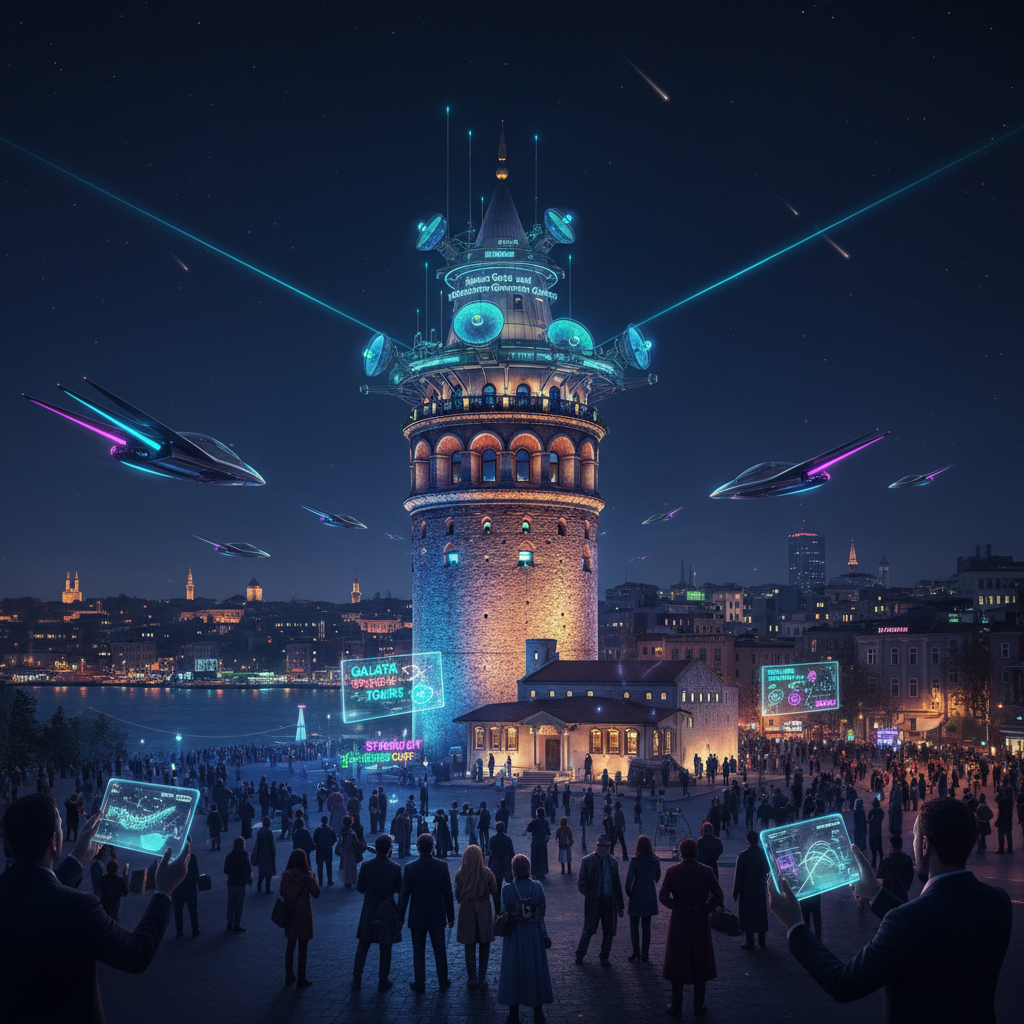
Galata Tower in Space: A Space Gate? From Meteorite Observations to Space Tourism 2026
The Galata Tower, which has adorned Istanbul's skyline for centuries and whispers a different story from each corner, has become even more mysterious in recent years with its association with space. Especially as of 2026, there is much talk about how this historical structure, beyond being merely an observation point, fuels interest in celestial bodies and the universe. This article explores the fascinating concept of the Galata Tower in Space, examining its historical connections to astronomy and its potential role in future space tourism. Attracting intense interest from both local and foreign tourists, the Galata Tower continues to be a center of attraction with its architecture, historical depth, and interesting connections established with current space explorations. For a deeper dive into its artistic representation throughout history, see Galata Tower: One Icon, a Thousand Reflections – Istanbul's Mirrored Legacy in Art History (2026).
Galata Tower Space Connection: Historical Astronomical Observations
The history of the Galata Tower is surprisingly intertwined with astronomy and space observations. The tower, which played a critical role in navigation for sailors and explorers for centuries, actually served as a kind of early observatory, making it a significant landmark in the story of the Galata Tower in Space.
Hezarfen Ahmed Çelebi and Space Enthusiasm
- Hezarfen Ahmed Çelebi's use of the tower as a launch ramp in the 17th century became a symbolic indicator of humanity's desire to reach the sky.
- Hezarfen's courageous attempt can be interpreted as one of the first sparks of modern aviation and space travel. Although unknown at the time, this flight attempt from the tower was a primitive reflection of humanity's desire to escape gravity and reach the boundless sky.
- This historic event can be considered one of the first steps in the Galata Tower space adventure, foreshadowing the idea of the Galata Tower in Space.
The Tower's Strategic Location and Astronomical Importance
Thanks to its commanding position overlooking the Bosphorus, the Galata Tower was an ideal spot for observing star and planetary movements in the past. Scientists and astrologers of the era made important notes by watching the sky from the tower's upper floors, further solidifying the connection of the Galata Tower in Space.
These observations were used in fields such as navigation and timekeeping, thus the tower not only illuminated paths on Earth but also played an important role under the guidance of the stars. This era also marked a period of significant scholarly contributions, as highlighted in Galata Tower: Contributing to Istanbul's Philosophical and Scientific Heritage as a Hub for Education and Enlightenment 2026.
Galata Tower and Space Tourism Potential in 2026
With the increasing popularization of the concept of space tourism today, the Galata Tower has the potential to acquire a new identity in terms of its connections with space. As of 2026, this rapidly developing sector is looking for ways to include historical structures in its ecosystem, making the concept of the Galata Tower in Space a tangible future.
Virtual Space Experiences and Meteorite Exhibitions
- The offering of interactive space experiences using advanced virtual reality (VR) and augmented reality (AR) technologies inside or around the tower is on the agenda.
- Visitors can travel between galaxies in a virtual environment, examine meteorites up close, or experience Hezarfen's flight from a different perspective, enhancing the experience of the Galata Tower in Space.
- Periodic exhibitions of meteorite fragments or meteorites can further strengthen the Galata Tower's connection with space science. For an idea of how such historical structures housed commerce, see Galata Tower: Once a 'Cellar' and Storage Hub – Istanbul's Commercial and Logistics Memory 2026.
Observatory of the Future: Galata Tower Space Observations
Public star-gazing events can be organized by installing modern telescopes and observation equipment at the top of the tower. In this way, visitors can both enjoy the unique view of Istanbul and have the opportunity to explore the depths of the sky, truly bringing the idea of the Galata Tower in Space to life.
These events, especially when held at night, can make the Galata Tower an indispensable destination for astronomy enthusiasts and contribute to space science education. The vision of the Galata Tower in Space is becoming a reality. For more on the growing interest in space tourism, you can consult SpaceX or examine reports from the National Aeronautics and Space Administration (NASA) about future projections in the sector.
Galata Tower Architecture and Cosmic Connections
The magnificent architecture of the Galata Tower is not only a structural masterpiece but also carries deep symbolic meanings connected to space and the universe. Its height, conical roof, and majestic stance are a reflection of the desire to reach the sky in ancient civilizations, embodying the spirit of the Galata Tower in Space.
Cosmic Interpretations of the Tower's Form
The cylindrical body and pointed top of the tower have been associated with the motif of "a bridge between earth and sky" since ancient times. This structural feature refers to humanity's effort to understand its place in the universe, making the Galata Tower in Space a powerful symbol.
Like the legend of the Tower of Babel, the Galata Tower unconsciously carries an astronomical and cosmological meaning. This makes it not just a historical beacon, but also a symbol of space travel and exploration, and a testament to the enduring idea of the Galata Tower in Space.
Lighting and Sky Science Themed Arts
Special lighting, especially in the evenings, can make the Galata Tower appear like a spaceship or a stargate. Such applications will reinforce the tower's modern-era space-themed image, further enhancing the concept of the Galata Tower in Space.
Contemporary art exhibitions about space, galaxies, and astronomy held around or inside the tower can increase visitors' awareness of this aspect of the tower.
Galata Tower Space Observations and Current Science
In 2026, with revolutionary developments in space technologies, the Galata Tower can regain its function as a scientific observation point by benefiting from these innovations. Already, amateur astronomy communities frequently use the vicinity of the tower for observations, contributing to the narrative of the Galata Tower in Space.
Meteor Shower Observations at the Tower
- Meteor showers that occur at certain times of the year can offer a unique experience when viewed from the Galata Tower.
- Live broadcasting of these visual spectacles through special telescopes and cameras can contribute to the promotion of the Galata Tower as a global science center, emphasizing the role of the Galata Tower in Space.
- These observations can increase interest in Galata Tower space science and encourage new generations to engage with science.
Galata Tower Shots Seen from Space
High-resolution Galata Tower images and videos taken from satellites or space stations resonate widely on social media and popular science platforms. The tower's iconic status, "observed from space," increases its global brand value, reinforcing the idea of the Galata Tower in Space.
Such visuals reveal that the Galata Tower is not only a historical heritage but also a universal point of discovery. You can often find such imagery shared by global scientific institutions like the National Geographic Society.
Galata Tower: A Symbol of Exploration in Space
Ultimately, the Galata Tower is not just a symbol of Istanbul, but a living symbol of humanity's endless curiosity, desire for exploration, and technological advancement regarding the sky and space. Space-themed events and observations, combined with its historical depth and architectural beauty, will shape the tower's future mission, solidifying its place as the Galata Tower in Space.
It is possible to say that in 2026 and beyond, the Galata Tower will continue to be a "gateway to space" for new generations of Hezarfens, just as it once was. This ancient structure will both bridge the past and the future and continue to inspire humanity's unending quest in the sky, making the concept of the Galata Tower in Space a timeless endeavor.