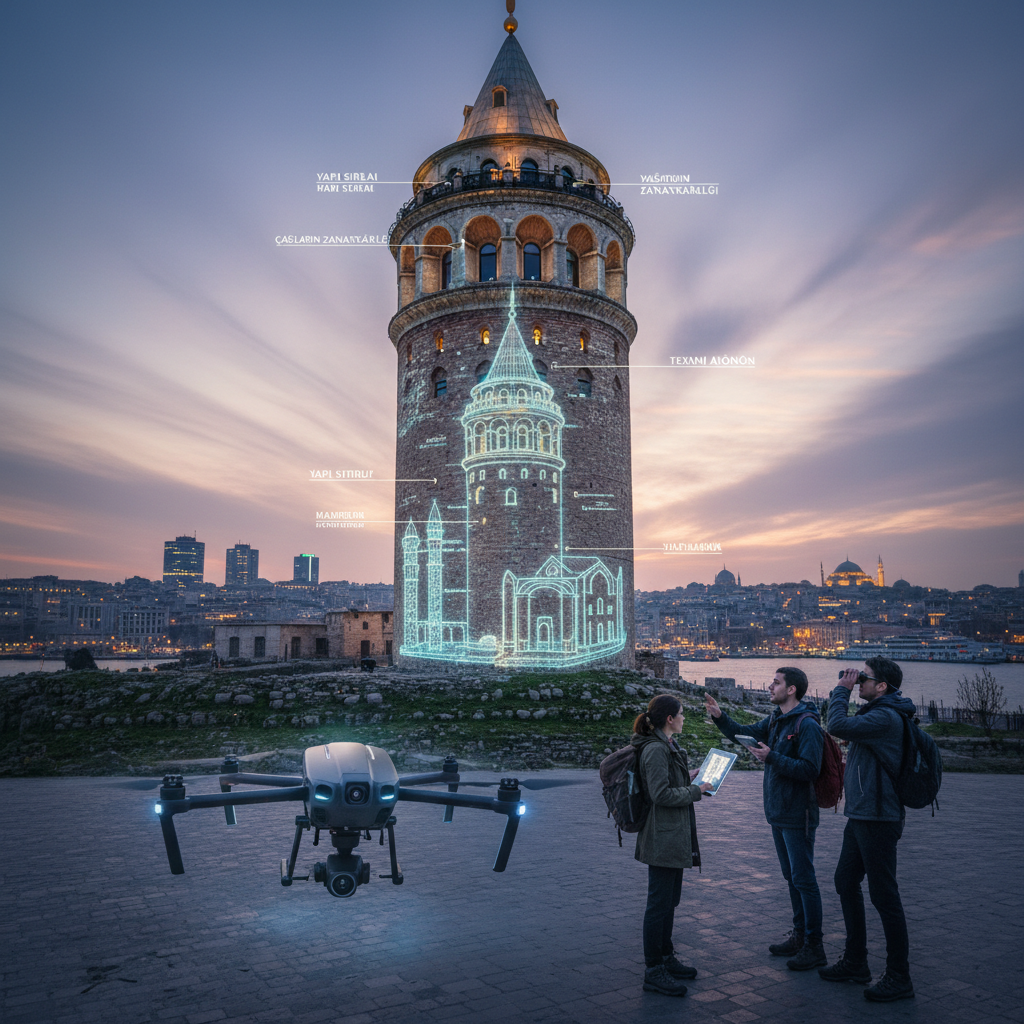
Galata Tower: Unveiling Its Construction Secrets
Adorning Istanbul's skyline for centuries, the Galata Tower, admired by every visitor, is not just a structure but also a convergence point of countless stories, legends, and architectural genius. In this article, we will delve into the fascinating world of Galata Tower: Unveiling Its Construction Secrets, exploring its building techniques, and the mysteries behind its timeless durability, as this unique masterpiece continues to stand tall as of 2026. The origins of that unique atmosphere you feel when you step into the tower are hidden in this construction process.
Historical Background and Initial Construction Process of Galata Tower
Although the Galata Tower was built as a lighthouse during the Byzantine period (around 507 AD), it largely acquired its current form with its reconstruction by the Genoese in 1348. Known as the "Tower of Christ" during this period, it played an important role in Istanbul's trade life. The advanced engineering knowledge of the Genoese formed the foundation of this structure. This initial construction process laid the groundwork for the secrets of Galata Tower's construction and historical continuity.
Byzantine Period and Foundations
While there are different opinions about when the tower was first built, it is generally accepted that it was erected on the foundations of an existing lighthouse tower in the early 6th century, during the reign of Byzantine Emperor Anastasius. Although there isn't much information about this early period tower, it indicates an awareness of its strategic location. This early history is part of Galata Tower: Unveiling Its Construction Secrets.
Genoese Reconstruction (1348)
During a period when the economic and military power of the Genoese colony was at its peak, the existing structure was rebuilt in a much grander fashion. In this period, the tower, as the highest point of the Galata walls, was used as both an observation point and a defensive structure. This reconstruction was not only an architectural achievement but also an engineering marvel defying natural disasters of its time. The Genoese reconstruction is a key chapter in Galata Tower: Unveiling Its Construction Secrets.
Galata Tower: Unveiling Its Construction Secrets - Materials and Techniques Used
The centuries-defying solidity of the Galata Tower is based on the quality of materials used and the construction techniques applied. To understand the Galata Tower: Unveiling Its Construction Secrets, it is necessary to examine the material selection and architectural details closely. The stones, mortars, and craftsmanship used are the main reasons why the tower stands as if it has sworn against time.
Stone Masonry and Lime Mortar
The construction of the tower largely used durable ashlar stones procured from the region. These stones were joined together with specially prepared strong lime mortars. These mortars were formulas enriched with special natural additives that could be even more durable than today's cement-based mortars. This strong binding material increased the tower's resistance to earthquakes and natural disasters, revealing more about Galata Tower: Unveiling Its Construction Secrets.
- Use of Local Stone: Stone procurement reduced construction costs and ensured efficient use of local resources.
- Special Lime Mortar: Mortar prepared with slaked lime, sand, brick dust, and other organic additives showed superior resistance to water and time.
- Master Craftsmanship: The meticulous shaping and placement of each stone ensured the perfect balance and integrity of the structure. For more on traditional masonry, a good resource is the Traditional Building Skills website.
Static and Construction Principles
The tower is built on a wide base and has a silhouette that tapers upwards. This conical structure makes it more resistant to wind loads. The thick walls and layered structure in its interior established the tower's static balance perfectly. Considering its height and weight, it was a rather ambitious engineering project for its time, further highlighting Galata Tower: Unveiling Its Construction Secrets.
Architectural Details and Functional Development of the Tower
The architectural structure of the Galata Tower is not only a design marvel but also shaped by the different roles it has assumed throughout history. Initially built as a watchtower and defensive tower, the structure was used as a fire tower, dungeon, and even an observatory during the Ottoman period. These changes were made possible by additions and reinforcements to the tower's construction. Today, it also serves as a cultural and digital media hub. Understanding these details is crucial for Galata Tower: Unveiling Its Construction Secrets.
Watchtower and Defensive Tower
For the Genoese, the Galata Tower was critically important for both monitoring the entry of enemy ships into the Bosphorus and protecting the weak points of the Galata walls. Its height offered a wide field of view.
Fire Tower Period
Due to the frequent large fires in Istanbul during the Ottoman Empire period, the Galata Tower served as an important fire watchtower from the 18th century onwards. Watchmen in the tower would spot smoke emerging from anywhere in the city and sound the fire alarm. Stairs and observation platforms were added to the tower for this role, showcasing another aspect of Galata Tower: Unveiling Its Construction Secrets.
Hezarfen Ahmed Çelebi and the Wing Experiment
The legend that Hezarfen Ahmed Çelebi flew from the Galata Tower to Üsküdar with wings he made himself in the 17th century further increased the tower's fame. This event shows that the tower was not only an observation point but also a symbol of bold human endeavors in history.
Restoration Works and Preservation of Galata Tower's Construction Secrets
Despite numerous earthquakes, fires, and storms throughout history, the Galata Tower has managed to remain standing. This durability is a result of regular restoration and maintenance work. Especially the comprehensive repairs made during the Republican era and later have played a key role in passing on the Galata Tower: Unveiling Its Construction Secrets to future generations. As of 2026, efforts to preserve the tower continue, ensuring its role as a cultural heritage site.
Ottoman Period Repairs
During the Ottoman period, the tower underwent major repairs at various times. Significant reinforcements were made after the 16th-century earthquake and after the fire in the early 18th century. During these repairs, the upper parts of the tower were reshaped in accordance with the architectural understanding of the period. The change in the wooden conical roof became prominent in these periods, adding to the narrative of Galata Tower: Unveiling Its Construction Secrets.
Modern Period Restorations
Major restorations in the mid-20th century helped the tower gain its present appearance. During these works, the original structure of the tower was adhered to, but reinforcements were made with modern techniques. Additions such as electrical installations, elevators, and observation decks have enabled visitors to experience the tower more comfortably.
- 1960s: One of the most comprehensive restorations was carried out during this period, with the wooden conical roof being rebuilt and overall strengthening provided.
- 2020 Restoration: Recent restorations included improvements to the interior and exterior, preserving the tower's historical texture. For more on historical preservation, refer to UNESCO's cultural heritage initiatives.
Unknowns of Galata Tower and Its Enduring Legacy
The Galata Tower attracts attention not only with its known history but also with the legends surrounding it and lesser-known details. These unknowns further enhance the tower's mysterious atmosphere. While Galata Tower: Unveiling Its Construction Secrets illuminates the genius of the past and the creativity of humanity, many more details still await discovery. This unique heritage will continue to rise into the future in the heart of Istanbul.
Legends and Folklore
The tower has been the subject of many legends. One of the best known is the legend of a mysterious dwarf princess living at the base of the tower. Another legend is that there was a secret love between the Galata Tower and the Maiden's Tower; these two towers gazed at each other from opposite sides of the Bosphorus.
Earthquake Resistance
Despite being located in an active earthquake zone like Istanbul, the Galata Tower's survival for hundreds of years without major destruction is proof of the engineering knowledge and construction quality of its era. Its flexible foundation structure and solid wall masonry are fundamental elements of this durability. This robustness showcases its engineering resilience against seismic activity, a testament to Galata Tower: Unveiling Its Construction Secrets.
As of 2026, the Galata Tower continues to exist not only as a tourist attraction but also as an architectural masterpiece and historical document. Its Galata Tower: Unveiling Its Construction Secrets will continue to impress us with the genius of the past and the creativity of humanity. When you visit this unique structure, remember that you are not only listening to the stones but also to the whispers of centuries. Further architectural insights can be found on encyclopedic resources like Britannica's entry on the Galata Tower.