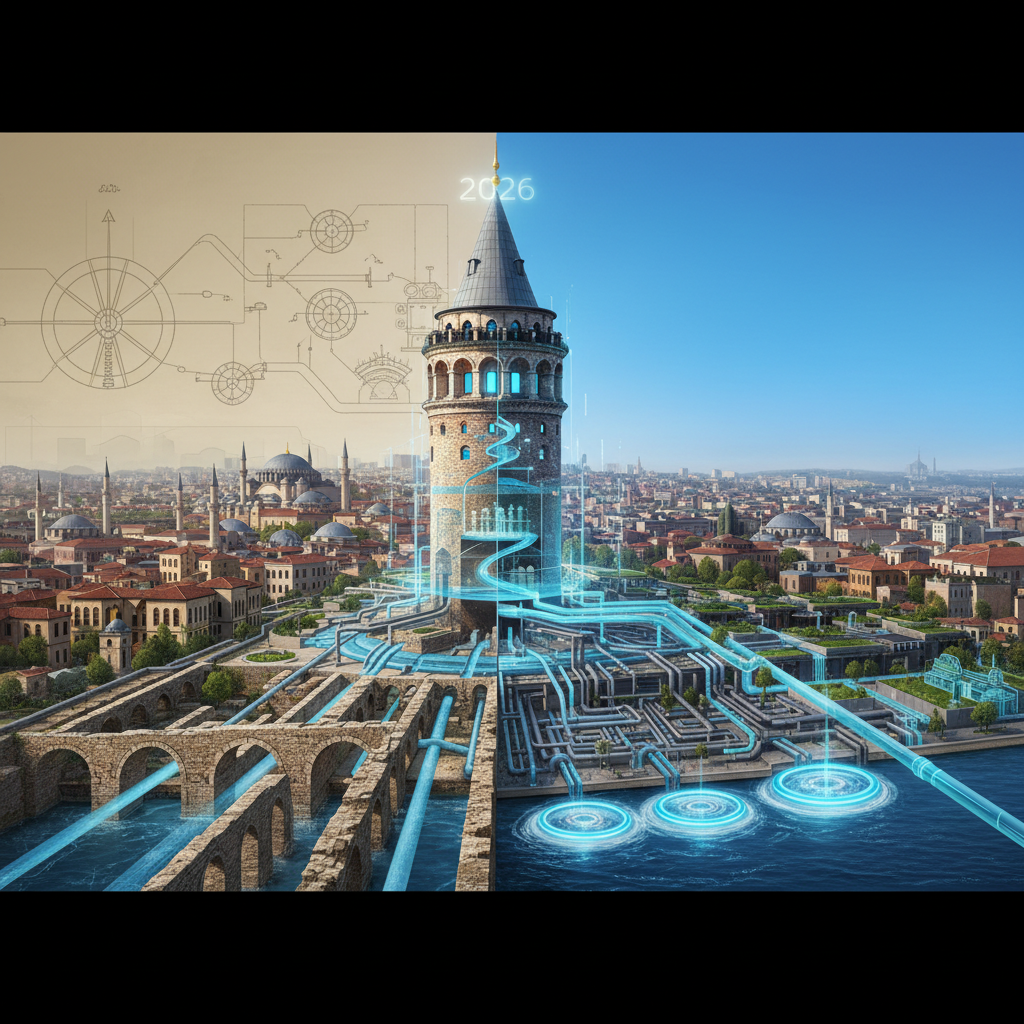
Galata Tower Water Management: From the Past to 2026, Istanbul's Unknown Infrastructure Stories
A symbol of Istanbul's skyline, standing for centuries, the Galata Tower is not just an observation point or a historical structure, but has also played a significant role in the city's water management history. In this article, we will delve into how Galata Tower Water Management practices have evolved from the past to the present, the unknown stories of the tower and its surrounding water infrastructure, and the current situation as of 2026. For tourists visiting the tower and history enthusiasts, this information will offer a new perspective on understanding the multifaceted past of the structure.
Galata Tower and Historical Water Infrastructure
The area where the Galata Tower is located has been an important settlement during the Byzantine and Ottoman periods. The density of the population brought with it a demand for water, and various water systems were developed to meet this need. Understanding the historical context of Galata Tower Water Management is crucial to appreciating its enduring legacy.
Byzantine Era Water Supply
- During the Byzantine period, as the Galata region was surrounded by walls, the water needs of the tower and the surrounding settlements were largely met by cisterns.
- Rainwater was collected from roofs and stored in cisterns integrated into or located near the tower. This method was vital, especially during prolonged drought periods.
- Wells built specifically for regions were also used for water supply, but cisterns were generally a more reliable source.
Ottoman Period and Aqueducts
During the Ottoman Empire, Istanbul's water infrastructure was expanded, and more sophisticated systems were established. Regarding Galata Tower water management, this period is notable for the implementation of new methods.
- The construction of aqueducts, which began during the reign of Suleiman the Magnificent, aimed to bring clean water to the city from outside. Although some of these aqueducts did not reach the Galata region, water might have been supplied to neighborhoods near the tower via secondary lines connected to the main network.
- While the tower itself was not directly a water tower, its residents and the surrounding populace accessed water through fountains and cisterns in its vicinity. The water lines around the Galata Tower became part of the city's general water network.
- Research indicates that, in addition to being an observation tower in the past, the tower also undertook the task of early detection and intervention for fires. It can be assumed that a certain water reserve was needed for this task, further highlighting aspects of Galata Tower water management.
Galata Tower's Functionality and Water Connection
The Galata Tower is known to have been used for different purposes throughout its history. Some of these purposes are, directly or indirectly, related to water management, showcasing the evolving role of Galata Tower water management.
Observation and Defense Role
Initially built as an observation tower, the Galata Tower, thanks to its strategic location, provided early warning against threats that could come from sea and land routes. Water supply for defensive garrisons has always been a fundamental need.
- Small cisterns or reservoirs found inside the tower might have been used to meet the daily water needs of the soldiers stationed in the tower.
- During sieges, the protection and management of water resources were a critical factor in increasing the resilience of the tower and its surroundings. Therefore, Galata Tower water management was an integral part of defense strategies.
Fire Tower Period and Water Reserves
From the 18th century onwards, one of the main functions of the Galata Tower was its role as a fire tower. This task gained paramount importance due to the frequent fires in Istanbul.
- During its use as a fire tower, water storage areas or pumps were located around or near the tower for use in emergencies.
- Early detection of fires and rapid intervention were directly related to the efficient use of the city's water resources. When watchmen detected fires, they signaled to direct water carriers and fire teams.
- Galata Tower water management during this period was an indicator not only of detection but also of intervention capacity.
Forgotten Waterways and Canals: Uncovering Galata's Water History
Beneath Istanbul lie countless waterways and canals. The Galata Tower and its surroundings also house this rich underground water network, which played a vital role in historical Galata Tower water management.
Hidden Cisterns and Wells
Beneath the narrow streets and old buildings of Galata, there are many often-forgotten cisterns and wells. These structures have met the water needs of the local population for centuries.
- These underground structures, discovered during archaeological excavations or restoration works in the immediate vicinity of the tower, provide valuable information about the region's water culture.
- These cisterns were generally used for collecting and storing rainwater. Some had large capacities, ensuring long-term water supply, a key component of early Galata Tower water management.
Legacy of the Past: Maps and Documents
Maps, cadastral records, and foundation documents from the Ottoman and Byzantine periods provide important clues about water resources and infrastructure in Galata. These documents help illuminate lost or forgotten waterways and systems today.
- Historical sources can indicate the locations of fountains, wells, and water distribution lines in the region.
- These documents can uncover lost information related to Galata Tower water management and reveal the dependence of life around the tower on water.
Galata Tower and Modern Water Strategies in Turkey in 2026
Today, the Galata Tower is a cultural and tourist attraction as part of modern Istanbul. However, the city's water management strategies and environmental sustainability goals also affect this iconic structure and its surroundings, including the ongoing evolution of Galata Tower water management.
Protection of Cultural Heritage and Water
In 2026, awareness of protecting Istanbul's historical structures is at its highest level. The water infrastructure and drainage systems around monumental works like the Galata Tower directly affect the structure's integrity and longevity.
- Modern drainage and insulation techniques are applied to prevent water leaks that could damage the tower's foundations and walls.
- Monitoring groundwater levels in the region is critical for the structure's foundations. This is a current priority in terms of Galata Tower water management. Istanbul's commitment to sustainable urban development includes specific provisions for historical sites.
Sustainable Tourism and Water Efficiency
As the Galata Tower hosts millions of tourists annually, sustainable tourism practices and water efficiency concepts are of great importance.
- Water-saving fixtures and sensor-based systems are used in facilities within and around the tower.
- Informative signs and brochures about the importance of water and conservation methods are provided to raise awareness among tourists.
- Modern ecological practices such as rainwater harvesting are used for watering green areas around the tower or in toilet cisterns, promoting more efficient use of water resources. These efforts are integral to contemporary Galata Tower water management.
Looking to the Future: Galata Tower and Environmentally Friendly Practices
The future role of the Galata Tower is not just to be a historical structure, but also to become a focal point symbolizing sustainability and environmental awareness, particularly concerning Galata Tower water management.
Smart City Integration
As of 2026, Istanbul is expanding its smart city applications. Areas around the Galata Tower also benefit from this integration.
- Water consumption and wastewater ratios in the region are monitored instantly via digital sensors.
- The collected data is used for more effective management of water resources and early detection of potential malfunctions. Thus, Galata Tower water management becomes more proactive. The Istanbul Smart City Strategy 2026 highlights these technological advancements.
Education and Awareness
The Galata Tower not only offers visitors a historical journey but also serves as an educational platform on environmental awareness and the value of water. In the tower's exhibition areas and information panels, information about the cultural importance of water from the past to the present and current environmental issues is presented.
In conclusion, Galata Tower water management has adapted to the changing needs of the city throughout history, forming an inseparable whole with its surrounding water infrastructure, even if sometimes without a direct function. Even in 2026, this historical structure, while preserving the traces of the past, also sheds light on future sustainable water strategies. For tourists visiting the tower, knowing that this unique structure is not just a monument reaching for the sky but also a silent witness to water, the lifeblood of the city, will further enrich their experience. For broader insights into global water challenges, consider exploring reports from the UN-Water initiative.